The Friday Five

New addition to the blog – Every Friday I will post links to some really important, thought provoking articles. I have to continuously educate myself and spread that knowledge to others. Taking an active role in unpacking privilege means one has to be constantly striving to break down oppression in their own circles instead of entering spaces designed for oppressed cultures; in short, white people who benefit from the creation and sustaining of white privilege must be the ones to tear it down.

I have a lot to think about in how I plan to enact that kind of change. I hope that these articles give credence to the many issues we are facing today, and educates us all on our journey.

Gaslighting is a Common Victim Blaming Tactic

The Broken System That Killed My Son

“I think when my son ran, that pissed them off. So they decided they were going to arrest him. But when they caught up with him, he gave them a struggle, and the gun went off. Instead of saying that, they fabricated a story. And that’s why they have so many stories. And now, because they didn’t apologize then, I’m not accepting it as an excuse. The police should have been transparent then.”

I Was Racially Profiled in My Own Driveway

15 Things Your City Can Do Right Now to End Police Brutality

Racism Is Not a Mental Illness

The Pervasiveness of Victim Blaming

Big story in the media today – Chicago Blackhawks star Patrick Kane has been accused of allegedly raping an unidentified woman on August 2nd.

The owner of the Chicago Blackhawks is “disappointed but hopeful.”

In what, exactly?

Disappointed that one of your players is a possible rapist? Hopeful that this girl is lying in an attempt to extort “rape money?” Because I’m not entirely sure why the media is attempting to spin this story into some sort of accusatory victim blaming version of Twister? And I’m even more fucking pissed that the cycle of violence towards women is reaching a fever pitch.

We’re women and we’re not playthings and being a feminist isn’t a dirty word – it simply means we’re tired of your misogynistic bullshit.

It would almost seem that victim blaming is innate to us – in a country where “innocent until proven guilty” seems to also mean “it was obviously the other persons fault.” Women are being oppressed by our male dominated culture at an alarming rate and when we fight back, we’re asked if we’re “on our period.” Or why we’re so “emotional.” Or my personal favorite, that being a feminist means I’m a “dyke bitch.” Because that’s obviously a logical response.

What is terrifyingly problematic is that we are placing blame on women who are victims of a crime.

Rape culture is real. Victim blaming is real.

If you need examples of what rape culture is, Click Here.

rape

Our society is upholding a culture of oppression towards victimized female voices. We are so desensitized to it that it’s made a mockery of feminist advances towards gender equality. We cannot trivialize or mock violence towards women. And we certainly cannot continue to ignore it’s existence. I’ve read countless articles and read numerous quotes that claim “rape culture is not real.”  Victim blaming can be defined as “putting blame for the occurrence of a traumatizing event on the survivor instead of blaming the perpetrator.” Condoning violence and making excuses for the attacker’s behavior is objectifying and oppressing the victim.

Many facets of our society treat women as objects for sexual pleasure instead of equal human beings. Why else are the Kardashian’s so famous? It’s certainly not for their intelligent cultural contributions. The “dumbing down” of women and treating them as afterthoughts is one of the biggest reasons why rape culture exists. We’re not seen as equals, so how can our experiences measure up? If we’re just objects, violence towards women is normalized. This is because people who are misogynists will either not care about harm being done to women or will purposely cause harm to women because they dislike them and may choose to use rape as a way to hurt them. Now, of course, we can’t believe that all men are rapists or inherently violent towards women the same way we can’t assume that women are only pure and innocent and without sexuality. If we were to believe that men are more sexual than women, then they are effectively in control of female sexuality. Both of these schools of thought are mitigating factors; but we must realize that men who violent towards women ARE the attacker, there is no way a woman can “ask” to be raped. Her clothing, her hair, her speech – absolutely none of it can engender rape. The media needs to stop upholding the “myth of rape culture” because it simply is not a myth.

Men do not have permission to objectify women or their bodies, nor do they have the right to violate or perpetuate violence towards women. The female voice is one that must be heard when it comes to our collective unity and progress; we cannot live in fear that men will assume a “rightful” position over power against us. The political climate today is one in which it is assumed that women are the lesser contributor to society, with their rights being diminished accordingly to the male dialogue. Hollywood celebrates it. Men think it’s a passing joke. We as women are the only ones who can swing the balance of power in our favor by standing against the dangerous, slippery slope of rape culture.

For more information on rape culture, or to find out how you can contribute to the fight against it, please check out the following links.

FORCE: Upsetting the Culture of Rape

What the Trump and Cosby Allegations Reveal About Rape Culture

Rape Culture is a Contract We Never Actually Signed

PARC – People Against Rape Culture

Working Through Feelings Without Words

This weekend is going to be a busy one, and I don’t have the time to write a new post, but I did want to drop a few links to some important articles that I’ve read this week and that have impacted my thought process.

I need to remind myself, in this journey, that I need to educate myself and filter my responses before I speak. I feel that there are a few sentiments in my previous post that exude privilege, but I own them and leave them so as to keep reminding myself that this is a journey. I won’t come to some spiritual awakening or epiphany overnight. Or maybe ever. The best that I can do is continue my efforts to learn. Be open. Be aware. Be ever mindful of others voices and how I navigate my responses.

How To Be An Ally If You’re a Person With Privilege

Want to End Systemic Racism? Drop the White Guilt

The Sam DuBose Police Report is Full of Falsehoods from Ray Tensing’s Colleagues

Ex-Cop in Sam DuBose Shooting Pleads Not Guilty

White Fragility: Why It’s So Hard to Talk to White People About Racism

I hope these articles help you on your journey as well.

Racial Stress and Being a Social Ally

This is a whole new process to me. Becoming socially conscious, endeavoring to be an ally for oppressed voices…it doesn’t come easy nor comfortable. But for me, it is a necessary conviction and evolution if I ever want to be come socially conscious and empathetic. Because what’s lacking most in society…is empathy. I’m not doing my cause, and the cause of others, any good if I can’t center myself and allow the conversation to shift away from what makes me comfortable. Not because I don’t matter (because I do believe that everyone has an opinion, whether I agree with it or not), but because the conversation isn’t about me. It’s bigger, broader and much more intricate than anyone can take at face value. To be an ally means to accept ones position as a privileged member of the dominant group who resides outside of an oppressed community, but actively participates and supports their struggle.

When I was growing up, I lived in a very diverse area. Nowadays, it seems that “diverse area” is code for “a lot of black people live there” and “not a good place to raise your upwardly mobile white family.” I suppose that I wasn’t so far off in that estimation, because 15 years after I graduated high school I still get those slightly horrified looks from people when I tell them where I grew up.

And by diverse area, I mean that I did go to school with predominantly black and latinx classmates, and the white population was, in fact, the minority if based on percentages. But never did I feel like a minority, never did I feel exclusion, and never did I feel racial barriers from anyone else. Except my fellow white community. The roadblocks never felt more real or more constricting than when navigating within my own kind.

I remember very clearly being in Mrs. Dodd’s kindergarten class when I received my first lesson in empathy in a school setting. I was taunting a fellow classmate, a skinny boy named Tony. I was reprimanded for calling him “Bony Tony” because it wasn’t kind, it wasn’t nice, to make someone else feel bad. And I still to this day feel violently ashamed of my behavior, and seeing the forlorn look on his face. It shouldn’t matter that he was black, but in owning my perspective and struggle for alliance, it highlights all too well that I was the aggressor.

And white people, despite our collective “best efforts” (note: sarcasm) otherwise, have been and will continue to be the aggressor to oppressed cultures simply because that’s historically the way it’s always been. White supremacy conjures up images of skinheads and the Ku Klux Klan, right? But what if white supremacy didn’t look so ugly? What if it wore pretty, designer clothes and drove a Mercedes SUV? It lurks within all of us – any of us, who, based solely on our skin color, is in a position of power. And acknowledging that power is heavy and scary.

Within the walls of my tidy hometown hid the rotten mold of racism and supremacy on every street corner. The town was very clearly divided into three parts – South of Merrick, the Village, and North Amityville. South of Merrick meant you lived in a 99.9% white neighborhood with grand old homes, manicured lawns and a mom who shuffled you between dance class and lacrosse practice after spending the day at your expensive private school. Living in the Village meant you were slightly on the outskirts of the idyllic and expensive groups, but still well within the realm of whiteness and middle class luxury. If you lived in North Amityville, you were black, or low-income white, or hispanic. You lived in the bad part of town.

I first lived in the Village, in a beautiful old Victorian which my parents lovingly restored. Later, in high school, we moved South of Merrick, although I didn’t go to dance class, or lacrosse practice, and my mother didn’t drive a Mercedes. And I, along with my two sisters, went to public school – most of my peers went to private parochial schools. Because the public school system had been branded “bad” (how generic) over the years, and it wasn’t the place to send your college-bound teenager; the budgets rarely passed, we lacked technological updates to the curriculum, and sports, arts and extracurricular activities were always on the chopping block. But I loved it. I loved every single second of it, even when Chantell slapped me in gym class in sixth grade. I may not have loved it then, but I can absolutely appreciate my formative years and how they have led me to this place.

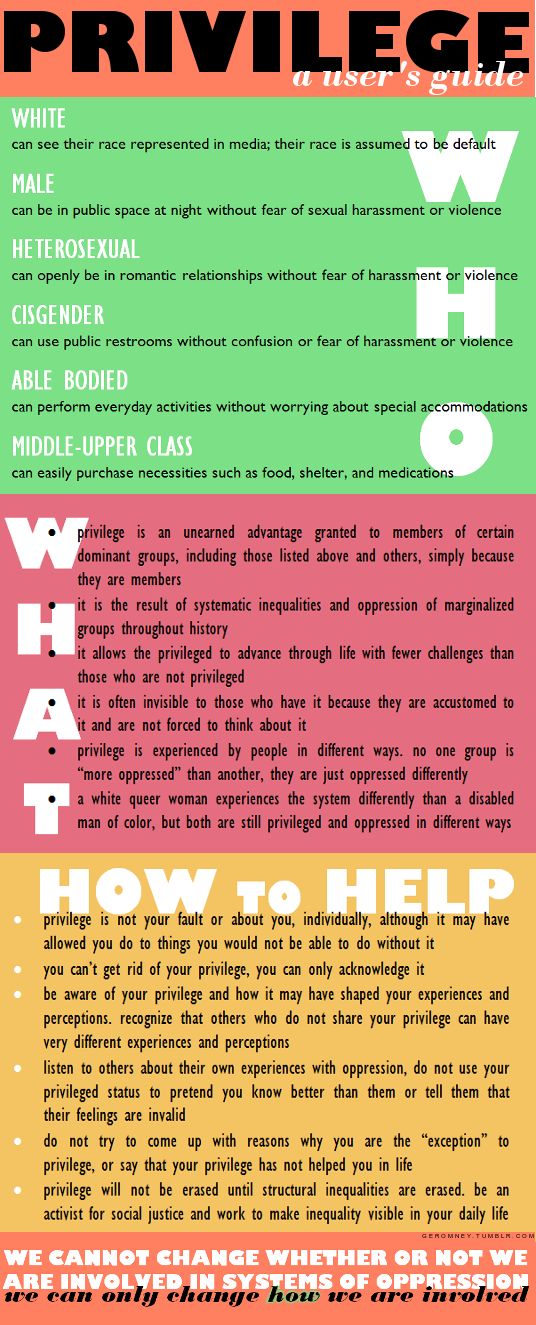
By this place, I mean the realization of my white history, and how it affects my interactions with others. It’s called unpacking, a reference to the seminal essay, Unpacking the Invisible Knapsack by Peggy McIntosh, which I read as a freshman History major in college. It was my first introduction to “white privilege.” To be told, or accept, that such a thing existed was at first shocking. And like most people, when confronted with something uncomfortable or accusatory, your initial reaction is to defend – defend yourself against false accusations and that, my friends, is “white fragility.”

White fragility is the horrified look (like above) that people give you when you call them out on that racist comment, or racist meme on Facebook. “I’m not racist! I have black friends! My cousin is black!” That’s your white fragility talking. It’s a deeply rooted, entrenched sense of entitlement. We live in a world of our own making that consistently upholds the belief of our superiority. And we avoid taking responsibility for our own whiteness because it seems in some way to betray how feel about ourselves, or how we portray ourselves to others. We can’t admit to something we don’t feel to be true.

 But it is true. Because the imbalance of power between whites and the oppressed is horribly shifted. And there’s no shame – really, there isn’t – in saying that you accept something about yourself that’s uncomfortable and squirmy and simultaneously wanting to do something about it. We believe that racists are bad people – and yes, people who are active aggressors towards oppressed people and cultures, who make it their mission to spread hatred and abuse, are very much indeed bad people. However, people who believe we live in a post-racial society (the Civil Rights Movement! Spike Jones! Rap music!) and that we are well-intentioned people who are simply incapable of racism. But you have to realize, racism is systemic, it is structured, it is engrained in the very fabric of our communities. And we all participate within our communities, which merely uphold the racist construct. Societal default is white superiority. Our voice is the default, the standard, and that’s not OK. We can’t have a genuine, constructive dialogue until the power balance shifts to make everyone’s voice equal. You are complicit in racism if you are not seeking to tear it down.

 Yes. You’re racist if you choose to sit back and allow the racist constructs of our society to continue. And to be an ally, to alleviate the racial stress and conflict, we must do our part to dismantle the boundaries that separate our communities, that speak to the unwritten rules in which we conduct ourselves and to accept the ugly truths about our privilege, to act not with white fragility, but with an openness and determination to disabuse ourselves of such beliefs.
The Uncomfortable Hashtags

Do you like feeling ignored? Dismissed? Like your opinion or feelings are not worthy of validation? In many different areas of my life, I feel “less than” and under-appreciated – mostly in my work environment – but also at times within my interactions with other people. It’s a shitty feeling, right?

So stop fucking hashtagging #alllivesmatter.

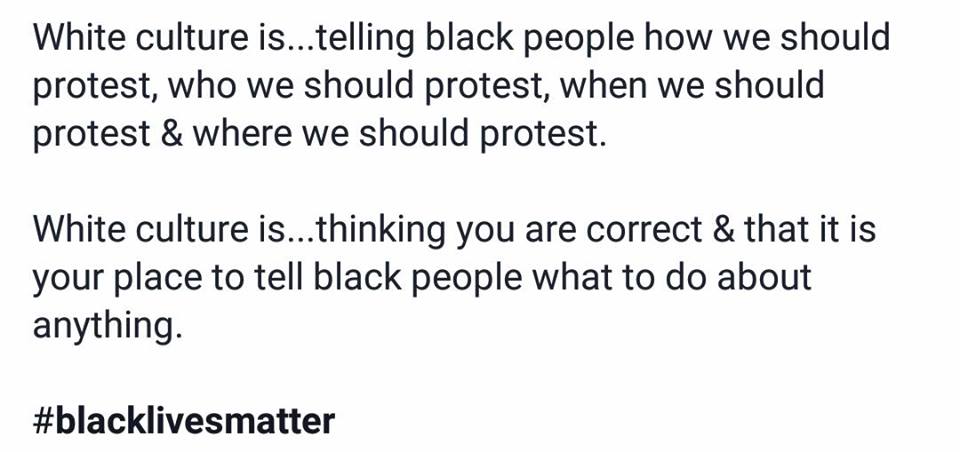
People really don’t understand what it means when they hashtag #whitelivesmatter, #alllivesmatter, #mylifematters. They think it’s a catchy, socially-motivated statement that says, “See, I’m part of this movement. I’m down with the buzzwords.” But they don’t take the time to understand the importance, and significance, of why #blacklivesmatter even began in the first place. And it shows their privilege in the fact that they can’t even deign to educate themselves.

The problem with the aforementioned exclusionary hashtags is that they’re a pithy comeback with the sole intention to invalidate #blacklivesmatter. When someone sees #blacklivesmatter and responds with #alllivesmatter, the message is  lost. The importance is lost. It immediately invalidates the previous statement in one swift move, an implication that black lives mattering isn’t inclusive in #alllivesmatter. It’s dismissive of the inclusion of black lives in that statement.

And it makes people, white people, really uncomfortable.

When the conversation isn’t centered around their best interests, people feel threatened. And #alllivesmatter is a profound testament to that threat; the need to push back, to attempt to steer the conversation to make them feel comfortable and safe and included. We know their lives matter. But they need to make sure we all know it, and in doing so, they diminish the meaning behind #blacklivesmatter.

No one is implying that #blacklivesmatter more. Simply that they matter too.

Why This Matters

I am a 31 year old married mother of one. I am able to move about society seemingly unnoticed, ensconced in the privilege of my whiteness, never worried about my existence and safety. And it’s unfair, and it’s unconscionable, that there are millions of people who are not afforded the simple right to exist on this Earth without fear.

It’s 2015 and we’re in a state of social crisis. A social crisis no one wants to admit is actually, really, truly, happening. Hidden behind the facade of social media, couched in their unabashed yet unacknowledged white privilege, hatred is seeping into our daily lives. It’s the memes you share without a single passing thought, it’s the right-wing conservative propaganda that you post without even a hint of irony, it’s in the micro aggressions that run through your head when you see a person of color encroaching just a tiny bit too close for your comfort. The sharing and propogating of meaningless and inflammatory totems that show one’s true self. The “I’m not racist, I have black friends.”

It has to stop.

I have one life on this earth, and I’ve spent 31 years vascillating between what I believe to be right and truthful and speaking my mind on it, only to be shut down. It’s because the people who hear and read my words lack the ability to do so with an open mind and heart; it’s not easy to open yourself to opposing schools of thought, and maybe it’s the bleeding heart liberal in me or the Libran blood coursing through my veins, but I can’t leave this earth having never had the courage to speak my feelings, to be a voice that rises above the fray.

This is my small corner of the universe. I have exceedingly ambitious goals and aspirations for what I can accomplish. I hope you will join me on this journey with a kind heart and likeminded spirit.